In a world that often celebrates loud achievements and visible success, the life of Sr. Gladys Karimi Ndege SE, tells a different story one of quiet impact, steady commitment, and transformative service. Born in Embu, Kenya, Sr. Gladys, fondly known as Sr. Karimi, is marking 22 years as a professed member of the Sisters of Emmanuel. Her journey is not only a reflection of faithfulness to her vocation but also a powerful testament to how one life can influence hundreds of others.
From the moment she embraced religious life, Sr. Karimi has dedicated herself to serving wherever she was needed most. Her early years in ministry saw her working in a health centre, where she encountered the realities of human vulnerability and the healing power of compassion. She later served as an administrator in a Catholic radio station, helping to spread messages of hope, faith, and moral guidance to wider communities. Her path also led her into higher education, where she contributed to shaping minds and nurturing intellectual growth.
Each of these experiences formed her into a well-rounded servant leader one who understands that true ministry is both practical and deeply human. Whether tending to the sick, managing communication platforms, or supporting academic growth, Sr. Karimi has consistently embodied a spirit of excellence grounded in humility.
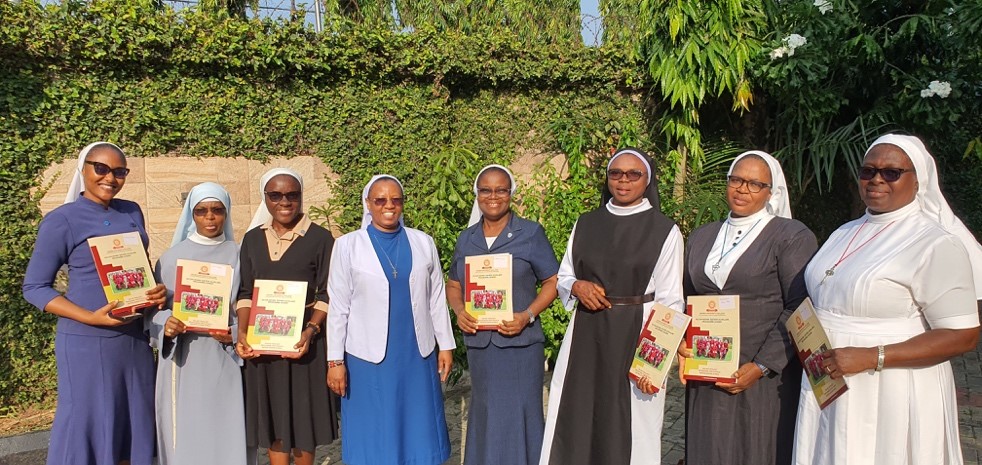
Presenting certificates to sisters in Lagos
Today, she serves at Hekima University College as the Scholarships Coordinator and Safeguarding Officer. In this capacity, she plays a central role in the Hilton-Hekima Sisters Scholarship Program, a transformative initiative that has impacted more than 600 religious sisters across Africa. Through this program, sisters who might otherwise have limited access to higher education are given an opportunity to pursue theological studies and deepen their understanding of faith, mission, and leadership.
At the heart of Sr. Karimi’s work is a simple yet profound guiding principle drawn from St. Joseph Allamano: “The good must be done well and in silence.” These words have shaped not only how she works, but why she works. Her approach is not about recognition, but about impact, ensuring that every sister she encounters is supported, encouraged, and empowered to grow.
Over the past four years, Sr. Karimi has witnessed firsthand the transformative power of education. Many sisters join the program with minimal exposure to technology and academic environments. Simple tools such as email, virtual learning platforms, and online communication can initially feel overwhelming. Self-expression in academic spaces may also be a challenge. Yet, within a relatively short period, change begins to unfold.
Through patient guidance, structured learning, and a supportive environment, these sisters begin to gain confidence. They learn how to navigate digital platforms, engage in intellectual discussions, and articulate their ideas with clarity. More importantly, they begin to see themselves differently not just as participants, but as capable leaders and contributors to the Church and society. The theological formation program at Hekima University College plays a critical role in this transformation.
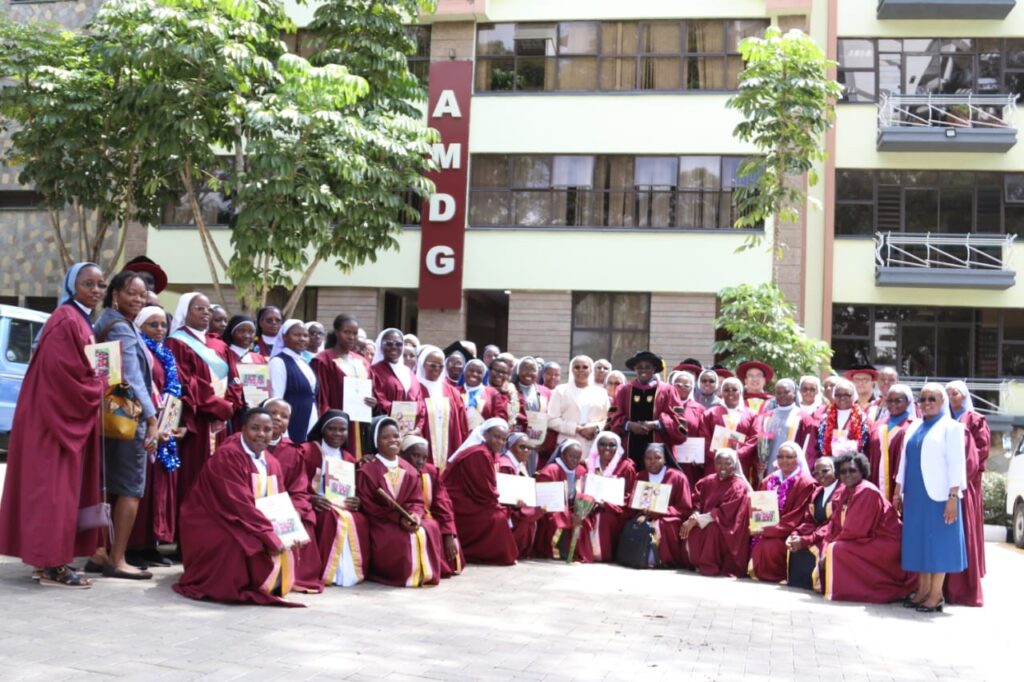
4th cohort 2025 graduation at Hekima University College grounds.
Offering courses in theology, psychology, canon law, and Church teachings, the program equips sisters with a holistic understanding of their vocation. It bridges the gap between faith and practice, helping them integrate spirituality into their pastoral and apostolic work.
For many, theology becomes more than an academic subject, it becomes a lens through which they understand their mission and their identity. It deepens their spiritual lives while simultaneously strengthening their ability to serve others effectively.
Equally significant is the culture of learning that the program fosters. At Hekima, academic rigor is not optional; it is expected. Faculty members emphasize research, critical thinking, and disciplined study habits. Sisters are encouraged to engage deeply with texts, ask questions, and pursue knowledge with curiosity and determination.
As a result, a remarkable shift occurs. Sisters who once felt intimidated by books begin to embrace them. Study becomes not a burden, but a source of empowerment. A culture of intellectual growth takes root, one that continues to influence their ministries long after they complete the program.
Despite her central role in this transformation, Sr. Karimi remains deeply grounded. She views her work not as a position of authority, but as a journey of accompaniment. Walking alongside the sisters, listening to their stories, and sharing in their experiences has become one of the most meaningful aspects of her vocation.
She recognizes that transformation is not one-sided. “As much as I support the sisters,” she reflects, “I also learn from them. Their resilience, their faith, and their commitment inspire me every day.”
This mutual exchange of growth and learning underscores the essence of her mission. It is not simply about providing opportunities, but about building relationships, creating spaces where women religious can thrive, support one another, and grow together.
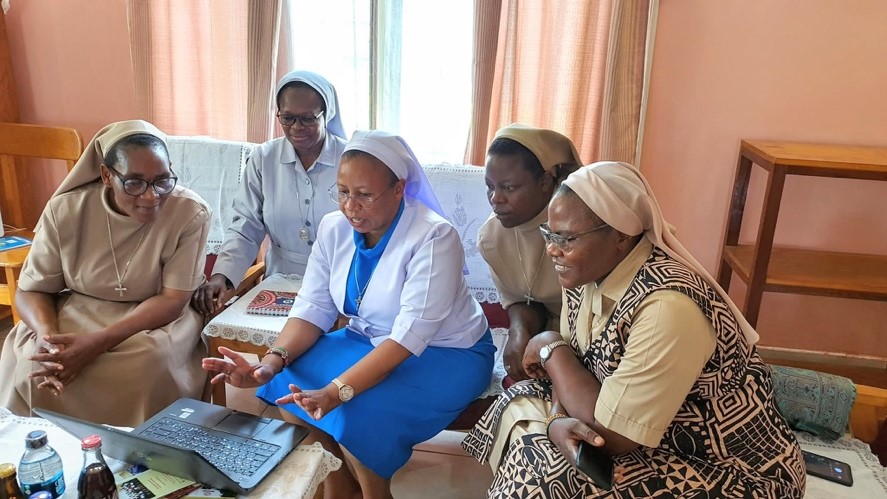
Sr. Gladys teaching the sisters on how to use HUC E- learning portal in Malawi
As Sr. Gladys Karimi Ndege celebrates 22 years of religious profession, her legacy is evident in the lives she has touched. It is seen in the confidence of a sister who can now lead a community meeting, in the voice of one who can articulate theological insights, and in the renewed sense of purpose among those she has mentored.
Her story reminds us that impact does not always come with visibility.
Sometimes, the most profound changes happen quietly, in classrooms, in conversations, and in the steady commitment to doing good faithfully.
In a rapidly changing world, where technology, education, and faith increasingly intersect, Sr. Karimi stands as a bridge—connecting tradition with transformation, and service with empowerment.
And true to her guiding principle, she continues her work with grace and humility, proving that indeed, the good must be done well and often, in silence.
Sr. Gladys Karimi Ndege SE
Sisters of Emmanuel
God among His people, as it is revealed to us in the privileged communication of the Gospels
Do you wish to get involved with us? Share your email
©2026. Sisters of Emmanuel. All Rights Reserved.